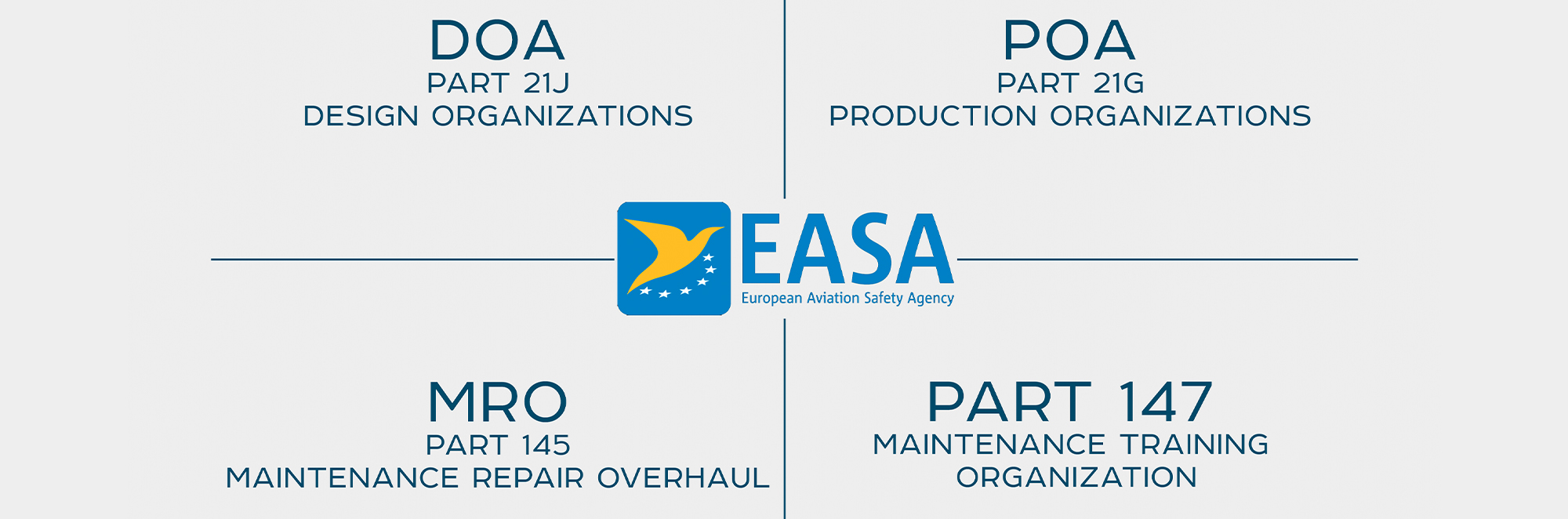
Operating under EASA, the European aviation safety authority, means working within a well-defined structure of organizations. Here’s a quick breakdown:
EASA Part 21J - Design Organizations (DOA): These organizations handle the design and certification of everything from small modifications to entire aircraft systems and structural repairs. For example, Airbus holds a DOA approval under EASA.21J.031, allowing them to certify their designs.
EASA Part 21G - Production Organizations (POA): Responsible for manufacturing parts, components, and expendables according to approved designs from a DOA. Given the critical nature of traceability in aviation, these organizations issue certificates for each part they produce, detailing when, how, and by whom it was made. For example, Safran Aircraft Engines holds the POA approval FR.21G.0007.
EASA Part 145 - Maintenance, Repair, and Overhaul (MRO): These organizations focus on the maintenance of aircraft and their parts. During maintenance, MROs work according to documentation approved by Part 21J and install components certified by Part 21G or Part 145. Once maintenance is complete, they issue the necessary certificates—Form 1 for components, or a Certificate of Release to Service (CRS) for the entire aircraft. For example, Lufthansa Technik holds the Part 145 approval DE.145.0001.
EASA Part 147 - Maintenance Training Organizations: These organizations ensure that aircraft maintenance engineers receive consistent, high-quality training. This regulation is key to maintaining safety and standards across the European Union.
✈️ Want more insights into aviation maintenance? Suscribe to our newsletter to stay informed ✈️


